

A recent crypto wallet drainer attack on Bonk.fun exposed how quickly attackers can steal cryptocurrency holdings. At least one trader lost approximately $273,000 after clicking a single compromised prompt on the Solana-based memecoin platform.
Unlike traditional hacks that exploit software vulnerabilities, crypto wallet drainer malware exploits your own wallet approvals — making these attacks both difficult to detect and nearly impossible to reverse once executed.
This comprehensive guide explains exactly how crypto wallet drainer attacks work, real-world examples from 2025-2026, and seven proven methods to protect your cryptocurrency from these sophisticated threats.
Table of Contents
- What Is a Crypto Wallet Drainer?
- How Crypto Wallet Drainer Attacks Work
- Real Examples: Bonk.fun, and Other Major Incidents
- Warning Signs of a Wallet Drainer Attack
- 7 Ways to Protect Yourself From Crypto Wallet Drainers
- What to Do If You’re Attacked
- How to Report and Recover Stolen Cryptocurrency
What Is a Crypto Wallet Drainer?
A crypto wallet drainer is a type of malicious smart contract or script that, once approved by a user, grants an attacker full permission to transfer funds out of a connected cryptocurrency wallet.
How crypto wallet drainers differ from traditional hacks:
- Traditional hacks exploit software vulnerabilities in exchanges, wallets, or protocols
- Crypto wallet drainer attacks exploit the user’s own transaction approval through social engineering
Because wallet drainer malware relies on legitimate wallet infrastructure (the approval mechanism), it bypasses most traditional security measures. Even technically experienced users have fallen victim because the approval prompt often looks identical to routine transaction confirmations.
Common disguises for crypto wallet drainer attacks:
- Fake “Terms of Service” update prompts
- Fraudulent airdrop claims
- Compromised NFT minting pages
- Fake wallet connection requests on legitimate-looking sites
- “Security verification” prompts
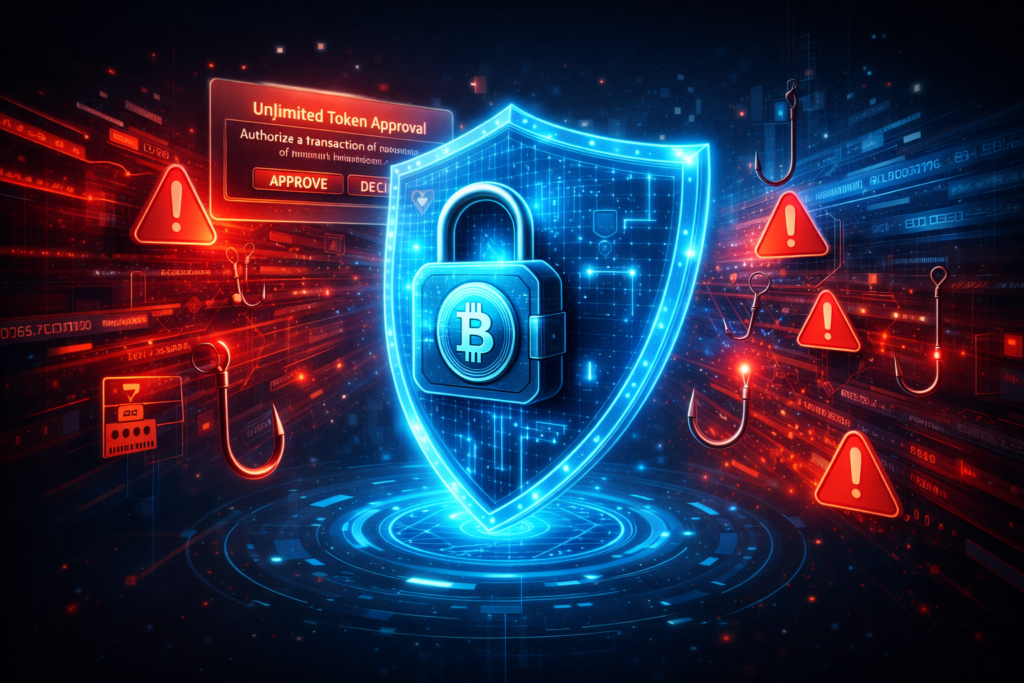
How Crypto Wallet Drainer Attacks Work (Technical Breakdown)
Understanding the mechanics of a crypto wallet drainer attack helps you recognize and avoid them. Here’s the step-by-step process attackers use:
Step 1: Attacker Gains Access to Legitimate Platform
Attackers compromise a trusted website through:
- Domain hijacking (DNS poisoning or registrar account takeover)
- Social media account compromise (X/Twitter, Discord, Telegram)
- Website code injection (compromised admin credentials)
- Malicious browser extensions that inject code into legitimate sites
Step 2: Malicious Smart Contract Is Deployed
The attacker creates a smart contract with unlimited token approval permissions. This contract is designed to:
- Request approval for all tokens in your wallet (not just one transaction)
- Bypass typical spending limits
- Remain active indefinitely until manually revoked
Step 3: User Approves the Transaction
The compromised website displays a prompt that looks legitimate:
- “Confirm wallet connection.”
- “Agree to updated Terms of Service.”
- “Claim your airdrop.”
- “Verify wallet ownership.”
The user clicks “Approve,” thinking it’s a routine action.
Step 4: Wallet Is Instantly Drained
Within seconds of approval:
- The attacker’s smart contract transfers all tokens to their wallet
- Funds are immediately laundered through mixers or DEXs
- The entire process completes before the victim realizes what happened
Why crypto wallet drainer attacks are so effective:
- The approval looks like a normal transaction in your wallet interface
- Most wallets don’t clearly warn when you’re approving unlimited token access
- Transaction happens on a legitimate blockchain (Ethereum, Solana, BSC, etc.)
- No software vulnerability needs to be exploited
Real Crypto Wallet Drainer Attack Examples (2025-2026)
Crypto wallet drainer attacks have struck multiple major platforms. Understanding these real cases shows how sophisticated and widespread the threat has become.
Bonk.fun Attack (2026): $273,000 Stolen
According to statements from the Bonk.fun team, attackers gained control of a team-related account associated with the Solana memecoin platform’s domain.
Attack timeline:
- Attackers modified the platform interface
- Inserted fake “Terms of Service” confirmation prompt
- The prompt was actually a malicious smart contract approval request
- At least one user lost their entire $273K portfolio before warnings spread
Security researchers issued warnings within minutes, but the damage was already done for early victims.
Curve Finance DNS Hijacking (2025)
Attackers hijacked Curve Finance’s DNS (Domain Name System) and redirected users to a malicious clone of the legitimate DeFi platform.
How it worked:
- Users typing the correct URL were sent to the attacker’s fake site
- Fake site looked identical to the real Curve Finance
- Wallet connection triggered the Drainer smart contract
- Multiple victims lost six-figure sums
Pump.fun Social Media Compromise (2025)
Attackers seized Pump.fun’s official X (Twitter) account and promoted fraudulent tokens with embedded wallet drainer links.
Why this was effective:
- Victims trusted the verified official account
- Fake token launch looked legitimate
- Users rushed to buy, approving drainer contracts in the process
According to blockchain security researchers, crypto wallet drainer scripts were responsible for hundreds of millions of dollars in losses in 2024 alone. The Cybersecurity and Infrastructure Security Agency (CISA) has published guidance on protecting against malware-based attacks targeting digital assets.
Warning Signs of a Crypto Wallet Drainer Attack
Recognizing these red flags can prevent a crypto wallet drainer attack before you approve the malicious transaction:
Unexpected Approval Requests
Any wallet prompt you weren’t expecting — especially disguised as Terms of Service updates or “security verifications” — should be immediately suspicious.
Unlimited Token Approvals
Check the transaction details before approving. If it requests access to “unlimited” tokens or your entire balance instead of a specific amount, it’s likely a drainer.
Urgency and Pressure Tactics
“Claim now or lose your airdrop!”
“Approve within 5 minutes!”
“Limited spots remaining!”
Legitimate projects don’t create artificial urgency for wallet approvals.
Slight Domain Misspellings
Check the URL carefully:
- uniswαp.org (Greek alpha instead of ‘a’)
- metarnask.io (‘r’ and ‘n’ together look like ‘m’)
- opensea-nft.com (official is opensea.io)
Social Media DM Links
Legitimate cryptocurrency projects never send wallet connection links via direct messages on Discord, Telegram, or X.
Too-Good-To-Be-True Airdrops
“Claim 5 ETH now!”
“You’ve been selected for a $10,000 token airdrop!”
If you didn’t interact with the project or provide your wallet address directly, it’s a scam.
7 Ways to Protect Yourself From Crypto Wallet Drainer Attacks
Defending against crypto wallet drainer malware requires building secure habits before an attack occurs. Here are seven proven methods:
1. Never Approve Unknown Transaction Requests
What to do:
- Read every wallet prompt carefully before clicking “Approve”
- Check what tokens you’re approving access to
- Verify the amount (if it says “unlimited,” decline immediately)
- When in doubt, reject and research first
Why this works: Crypto wallet drainer attacks require your explicit approval. No approval = no attack.
2. Verify Official Domains Before Connecting Wallets
What to do:
- Bookmark legitimate URLs of platforms you use regularly
- Always navigate from your bookmarks, not search results or social media links
- Check for HTTPS and a valid SSL certificate
- Look for browser security indicators (padlock icon)
Pro tip: A single misplaced character in a domain (uniswap.corn instead of uniswap.com) can lead to a drainer site.
3. Revoke Token Approvals Regularly
What to do:
- Use Revoke.cash (Ethereum and EVM chains)
- Use Etherscan’s Token Approval Checker
- Audit and cancel smart contract approvals you no longer need
- Do this monthly, or after using any new DeFi protocol
Why this works: Even if you accidentally approved a drainer in the past, revoking it prevents future theft.
4. Use Hardware Wallets for Large Holdings
What to do:
- Store significant cryptocurrency in Ledger, Trezor, or similar hardware wallets
- Use hot wallets (MetaMask, Phantom) only for small amounts needed for active trading
- Never connect your hardware wallet to untrusted sites
Why this works: Hardware wallets require physical confirmation for every transaction, adding a critical layer of protection against remote crypto wallet drainer attacks.
5. Avoid Connecting Wallets to Unfamiliar Platforms
What to do:
- Research any platform thoroughly before connecting your wallet
- Check CoinGecko, CoinMarketCap, or DeFi safety ratings
- Look for smart contract audits from reputable firms (CertiK, PeckShield)
- If you haven’t verified a project, don’t connect a wallet with significant assets
6. Monitor Wallet Activity and Approvals
What to do:
- Set up wallet alerts for large transactions
- Use blockchain explorers to check recent approvals
- Review your active token approvals weekly
- Tools: Etherscan, BscScan, Solscan, depending on your chain
Why this works: You can spot suspicious approvals before a drainer is triggered.
7. Follow Blockchain Security Researchers
What to do:
- Follow security accounts on X/Twitter: @CertiK, @PeckShield, @zachxbt
- Join security-focused Discord/Telegram communities
- Enable push notifications for major security accounts
- Check CertiK’s security blog for the latest drainer incidents
Why this works: Real-time warnings during active incidents (like Bonk.fun) have prevented losses for thousands of users.
What to Do If a Crypto Wallet Drainer Hits Your Account
If you suspect you’ve approved a malicious transaction, act immediately — time is critical:
Immediate Actions (First 5 Minutes)
- Move remaining assets to a fresh, uncompromised wallet immediately
- Revoke all approvals via Revoke.cash or equivalent tool for your blockchain
- Disconnect the wallet from all websites and DApps
- Check the transaction history on the blockchain explorer to see where the funds went
Documentation (Next 30 Minutes)
- Screenshot everything:
- The malicious approval prompt (if still visible)
- Transaction hash (TXID) of the drainer approval
- Destination wallet addresses where funds were sent
- The compromised website URL
- Record timestamps of when you approved the transaction and when funds were stolen
- Save wallet addresses: yours, the attacker’s, and any intermediate addresses
Reporting (Within 24 Hours)
- Report to law enforcement:
- United States: FBI Internet Crime Complaint Center (IC3)
- Switzerland: Cybercrime.ch
- Your local cybercrime unit
- Contact exchanges where stolen funds may have been sent (provide transaction hashes)
- Alert the community: Post warnings on X/Twitter, Reddit, to prevent others from falling victim
How to Report and Recover Stolen Cryptocurrency
Victims of crypto wallet drainer attacks can seek professional blockchain forensic assistance from Crypto Recovery Expert Agency.
The agency specializes in:
- Blockchain transaction tracing — Following stolen funds across multiple wallets and chains
- Exchange identification — Determining if funds reached a regulated exchange where they can be frozen
- Laundering route analysis — Tracking how attackers attempt to obscure stolen cryptocurrency
- Recovery investigation assistance — Working with victims to document evidence and coordinate with exchanges
If you have lost cryptocurrency due to a crypto wallet drainer attack, phishing, or fraudulent investment platform, you can contact the agency to begin a recovery assessment.
What to expect:
- Free initial case evaluation
- Honest assessment of recovery likelihood
- Blockchain forensic analysis using professional tools
- No upfront fees — success-based pricing only
Learn more: Meet the blockchain forensics team
Final Thoughts on Crypto Wallet Drainer Threats
The Bonk.fun breach and similar crypto wallet drainer attacks are clear reminders that these threats can strike any platform, at any time. As cryptocurrency adoption grows, attackers are increasingly targeting legitimate, trusted services to exploit the confidence users place in them.
Domain hijacking combined with wallet drainer scripts has proven to be a fast, scalable, and devastatingly effective method of theft. In 2026, these attacks have cost victims hundreds of millions of dollars.
Your best defense remains consistent vigilance:
- Verify every domain before connecting your wallet
- Question every unexpected approval prompt
- Revoke permissions you no longer need
- Use hardware wallets for significant holdings
- Stay informed about active threats
A few seconds of caution can protect a lifetime of savings from crypto wallet drainer malware.